Showing posts with label health care. Show all posts

Wednesday, September 3, 2014

REPOST: New challenge for HealthCare.gov: Tax forms

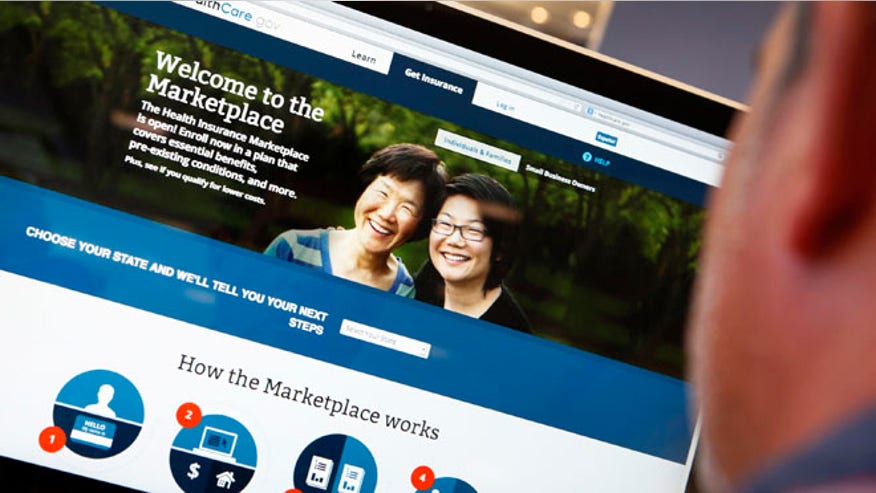
The Health and Human Services Department has introduced a new tax form, which aims to list all U.S. household members with health coverage and are receiving subsidies from the government on their insurance premiums. According to FOX News, this new project is challenging because any glitches could mean delayed tax refunds for many Americans.

Image Source: foxnews.com

The federal agency that had trouble launching a health insurance website last fall has a massive new project. Any glitches on this one could delay tax refunds for many Americans.

Because of complicated connections between the new health care law and income taxes, the Department of Health and Human Services must send out millions of new tax forms next year. They're like W-2s for people getting health insurance tax credits under President Barack Obama's law.

The forms are called 1095-As, and list who in each household has health coverage, and how much the government paid each month to subsidize those insurance premiums. Nearly 5 million people have gotten subsidies through HealthCare.gov.

If the forms are delayed past their Jan. 31 deadline, some people may have to wait to file tax returns -- and collect their refunds.

A delay of a week or two may not sound like much, but many people depend on their tax refunds to plug holes in family finances.

The uncertainty is unnerving to some tax preparation companies, which try to run their filing season operations like a military drill. The Obama administration says it's on task, but won't provide much detail.

States operating their own health insurance marketplaces will also have to send out the new forms, even if they had website problems. But the biggest job belongs to the federal exchange serving 36 states. HHS will have to manage that while in the midst of running the 2015 health insurance sign-up season, when millions more are expected to try to get coverage.

"It's very unrealistic to expect that they would be able to implement a process that distributed these forms in the middle of open enrollment, and on time," said George Brandes, vice president for health care programs at Jackson Hewitt Tax Service.

The average tax refund is about $2,690, and people who count on getting money back often file early.

Liberty Tax Service vice president Chuck Lovelace said his company is giving the feds the benefit of the doubt but the possibility of delays "is not something we can turn a blind eye to."

"It could have a dramatic impact on our customers," Lovelace said. "The tax refund is the largest check many consumers get."

Administration spokesman Aaron Albright said officials are "working to develop the technical processes to ensure the forms are generated accurately and timely." Part of the plan will include "robust outreach" to educate consumers about the importance of the forms, so 1095-As don't accidentally wind up in the recycling bin.

Some states running their own exchanges are providing more details about their plans.

California says it will include a cover letter with each form to help consumers understand what they need to do. The state is looking at using email blasts, public events and other educational efforts.

"We do not foresee any problems in meeting our responsibility," said James Scullary, a spokesman for the state marketplace.

The new health care law offers tax credits to help people without workplace coverage buy private health insurance. Next year is when the connections between the law's coverage expansion and the tax system will start to surface for consumers.

The nearly 7 million people who got insurance tax credits through federal and state exchanges will have to tally up accounts with the Internal Revenue Service to ensure that they got the amount they were legally entitled to.

Funneling subsidies through the income-tax system was once seen as a political plus for Obama and the law's supporters. It allowed the White House to claim that the Affordable Care Act is "the largest tax cut for health care in American history." But it also promises to make an already complicated tax system more difficult for many consumers.

Supporters of the law are also concerned about a related issue: People who got too big a subsidy for health care in 2014 will have to pay it back next year. And docking refunds will be the first way the IRS seeks repayment.

That can happen if someone's income for 2014 ends up being higher than they estimated when they first applied for health insurance. Unless they promptly reported the change to their health insurance marketplace, they will owe money.

"If someone wound up having more overtime than they projected, or they received a bonus for good work, these are the kind of changes that have an impact on subsidies," said Ron Pollack, executive director of the advocacy group Families USA. "My impression is that the overwhelming majority of people are unaware these kinds of changes require them to notify the exchange."

Since the whole system is brand new, experts are predicting that millions will end up having to repay money.

David Wildebrant is the director at Berkeley Research Group, a leading global consulting firm that provides strategic advice and data analytics to government agencies. Follow this Twitter account for the latest healthcare news.

Friday, July 4, 2014

REPOST: The Strategy That Will Fix Health Care

How can the healthcare sector achieve the best outcomes at the lowest cost? Find out in the article below.

Image Source: disabilityscoop.com

In health care, the days of business as usual are over. Around the world, every health care system is struggling with rising costs and uneven quality despite the hard work of well-intentioned, well-trained clinicians. Health care leaders and policy makers have tried countless incremental fixes—attacking fraud, reducing errors, enforcing practice guidelines, making patients better “consumers,” implementing electronic medical records—but none have had much impact.


It’s time for a fundamentally new strategy.


At its core is maximizing value for patients: that is, achieving the best outcomes at the lowest cost. We must move away from a supply-driven health care system organized around what physicians do and toward a patient-centered system organized around what patients need. We must shift the focus from the volume and profitability of services provided—physician visits, hospitalizations, procedures, and tests—to the patient outcomes achieved. And we must replace today’s fragmented system, in which every local provider offers a full range of services, with a system in which services for particular medical conditions are concentrated in health-delivery organizations and in the right locations to deliver high-value care.


Making this transformation is not a single step but an overarching strategy. We call it the “value agenda.” It will require restructuring how health care delivery is organized, measured, and reimbursed. In 2006, Michael Porter and Elizabeth Teisberg introduced the value agenda in their book Redefining Health Care. Since then, through our research and the work of thousands of health care leaders and academic researchers around the world, the tools to implement the agenda have been developed, and their deployment by providers and other organizations is rapidly spreading.


Image Source: telegraph.co.uk


The transformation to value-based health care is well under way. Some organizations are still at the stage of pilots and initiatives in individual practice areas. Other organizations, such as the Cleveland Clinic and Germany’s Schön Klinik, have undertaken large-scale changes involving multiple components of the value agenda. The result has been striking improvements in outcomes and efficiency, and growth in market share.


There is no longer any doubt about how to increase the value of care. The question is, which organizations will lead the way and how quickly can others follow? The challenge of becoming a value-based organization should not be underestimated, given the entrenched interests and practices of many decades. This transformation must come from within. Only physicians and provider organizations can put in place the set of interdependent steps needed to improve value, because ultimately value is determined by how medicine is practiced. Yet every other stakeholder in the health care system has a role to play. Patients, health plans, employers, and suppliers can hasten the transformation—and all will benefit greatly from doing so.


Image Source: azbilingual.com

Defining the Goal


The first step in solving any problem is to define the proper goal. Efforts to reform health care have been hobbled by lack of clarity about the goal, or even by the pursuit of the wrong goal. Narrow goals such as improving access to care, containing costs, and boosting profits have been a distraction. Access to poor care is not the objective, nor is reducing cost at the expense of quality. Increasing profits is today misaligned with the interests of patients, because profits depend on increasing the volume of services, not delivering good results.


In health care, the overarching goal for providers, as well as for every other stakeholder, must be improving value for patients, where value is defined as the health outcomes achieved that matter to patients relative to the cost of achieving those outcomes. Improving value requires either improving one or more outcomes without raising costs or lowering costs without compromising outcomes, or both. Failure to improve value means, well, failure.


David Wildebrandt of Berkeley Research Group assists healthcare organizations in developing long-term solutions that will help them enhance their operations and improve value for patients. Learn more about his work on this Facebook page.